
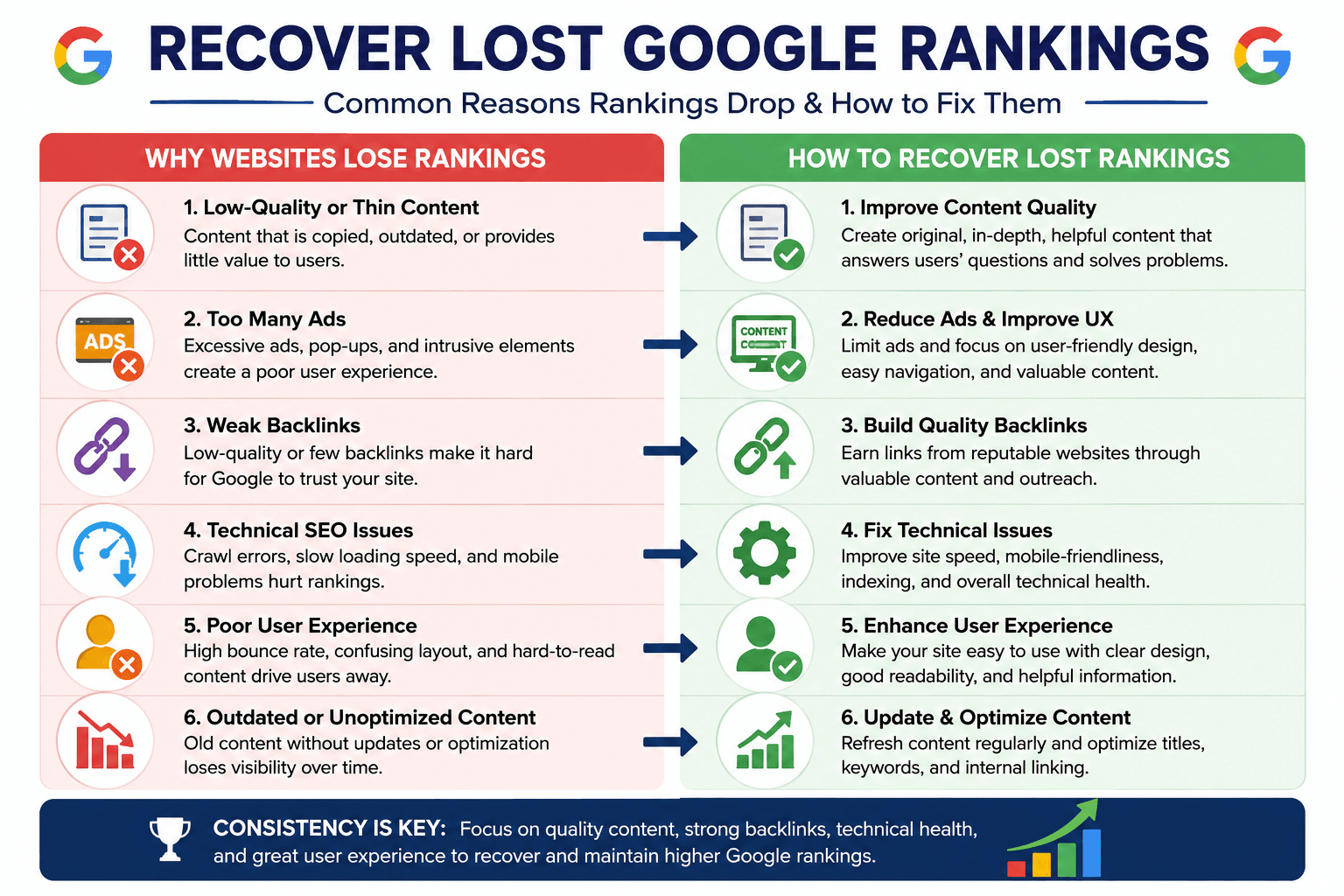
To recover lost Google rankings, you must address content quality, technical SEO issues, and overall user experience. If your site has recently experienced a sudden drop in search traffic or keyword positions, identifying the root cause is the first step toward reclaiming your organic visibility.
As Google’s ranking algorithms evolve, strategies that emphasize helpful, original content and seamless user interactions have replaced outdated SEO tactics. Historical algorithm updates—such as the Google Panda update—fundamentally shifted search evaluation by penalizing thin content while rewarding comprehensive, user-focused resources.
This practical guide outlines the essential steps to audit your site, fix technical drops, improve content quality, and rebuild organic search rankings sustainably.
Technical vs. Content-Based Ranking Drop Diagnosis
| Drop Factor | Potential Causes | Recommended Action |
| Content Quality Issues | Thin text, duplicate pages, keyword stuffing | Consolidate thin pages, expand guides, refresh data |
| Technical Errors | Slow page speed, broken links, indexing blocks | Fix crawl errors, optimize images, update sitemaps |
| User Experience (UX) | Excessive pop-ups, high bounce rates | Clean up ad placements, improve mobile readability |
| Backlink Profile | Spammy links, lost editorial mentions | Disavow toxic links, build organic backlink authority |
Why Websites Lose Google Search Rankings
A sudden drop in search performance is rarely caused by a single issue; it is typically the cumulative result of technical, architectural, or content-related factors.
Primary Reasons for Ranking Drops:
Thin or Outdated Content: Pages that fail to answer search intent thoroughly or contain stale information.
Excessive Advertising Above the Fold: Overusing intrusive banners or pop-ups that degrade the user experience.
Unnatural Backlink Loss or Spam: Losing high-authority domain links or accumulating toxic, automated backlinks.
Core Algorithm Updates: Shifts in Google’s ranking systems that re-evaluate site quality and content relevance.
Technical Crawl Blocks: Broken redirects, missing canonical tags, or page speed slowdowns.
6 Practical Steps to Recover Your Google Rankings
1. Upgrade and Expand Your Core Content
Google prioritizes content that is original, well-structured, and genuinely helpful to the searcher. Review pages that lost rank and expand them into comprehensive guides.
Answer search queries in full detail.
Add practical examples, clear subheadings, and actionable advice.
Update outdated statistics, broken external links, and old screenshots.
2. Balance Monetization and Ad Placements
Pages overloaded with intrusive ads, aggressive pop-unders, or banner clusters above the fold disrupt readability and increase bounce rates. Ensure primary content remains immediately visible on both desktop and mobile screens.
3. Clean Up Your Technical SEO Foundation
Even exceptional content will struggle to rank if search engines encounter technical crawling barriers.
Page Load Speed: Compress large image files and optimize server response times.
Mobile Responsiveness: Verify that font sizes and tap targets function cleanly on mobile devices.
Internal Link Hierarchy: Use contextual internal links to pass equity to key landing pages.
4. Earn Natural, High-Authority Backlinks
Backlink quality matters significantly more than volume. One contextual link from a respected, niche-relevant publication passes far more search value than dozens of low-quality directory links. Focus on producing original research, comprehensive guides, and shareable tools that earn editorial references naturally.
5. Optimize User Experience (UX) Metrics
Google monitors engagement signals to determine user satisfaction. Improve time-on-page and lower bounce rates by making navigation intuitive, using readable typography, and eliminating unnecessary visual clutter.
6. Maintain Baseline Traffic During Recovery
While fixing technical SEO and waiting for search crawlers to re-index your updated pages, maintain continuous site exposure by leveraging alternative traffic channels. Utilizing targeted visitor channels ensures steady brand exposure while organic recovery takes place.
For strategies on driving direct, low-cost traffic to your destination pages, read our guide on cheap advertising that drives website sales.
SEO Audit Checklist Before Re-Indexing
Before submitting your updated URLs in Google Search Console, complete this operational pre-flight checklist:
Site Audit Checklist:
Mobile Usability: Verify that mobile pages load quickly without horizontal scrolling.
Content Depth: Ensure key landing pages provide complete solutions to search intent.
Ad Layout Ratio: Confirm primary content is visible above the fold without scrolling past ads.
Internal Linking: Add contextual links pointing to newly refreshed articles.
Conversion Setup: Verify that lead forms, buttons, and analytics pixels are active.
Target Audience Focus: Align traffic campaigns with specific regional markets, such as USA targeted website traffic.
Learn more about tracking revenue metrics alongside organic recovery in our guide on why conversions matter more than clicks.
How LinkTargeter Supports Digital Promotion
While organic search recovery develops over time, LinkTargeter provides fixed-quantity, targeted visitor campaigns to maintain consistent site traffic and test landing page conversions without complex auction bidding.
Core LinkTargeter Benefits:
Fixed Campaign Costs: Eliminate unpredictable click-cost spikes.
Audience Category Matching: Direct visitors from channels aligned with your industry.
Smooth Delivery Pacing: Distribute visitor volume evenly throughout your campaign.
Simple Dashboard Setup: Launch campaigns in minutes without hiring an agency.
Learn more about selecting the best promotional channels in our article on where to advertise your website online or explore available packages on our targeted website traffic campaign page.
Frequently Asked Questions
How long does it take to recover lost Google rankings?
SEO recovery timelines vary depending on the severity of the drop. Simple technical fixes or content refreshes can show improvement within weeks, while recovering from sitewide quality penalties can take several months as Google re-crawls your site.
Can thin content on a few pages affect my entire website?
Yes. Sitewide quality algorithms evaluate your domain’s overall content utility. A high percentage of low-quality or duplicate pages can drag down the ranking potential of your better articles.
Should I remove or update low-performing pages?
In most cases, updating, expanding, and consolidating thin pages into a single, comprehensive guide yields better results than simply deleting pages. If a page serves no user purpose, removing or no-indexing it can improve crawl efficiency.
Build Long-Term Search Visibility Today
Recovering lost search rankings requires systematic audits, high-quality content updates, and clean technical execution. By focusing on user intent, fixing technical issues, and maintaining a balanced traffic strategy, you can rebuild search visibility and protect your site against future algorithm shifts.
Ready to bring targeted visitors to your site? Start Your Targeted Traffic Campaign Today.