
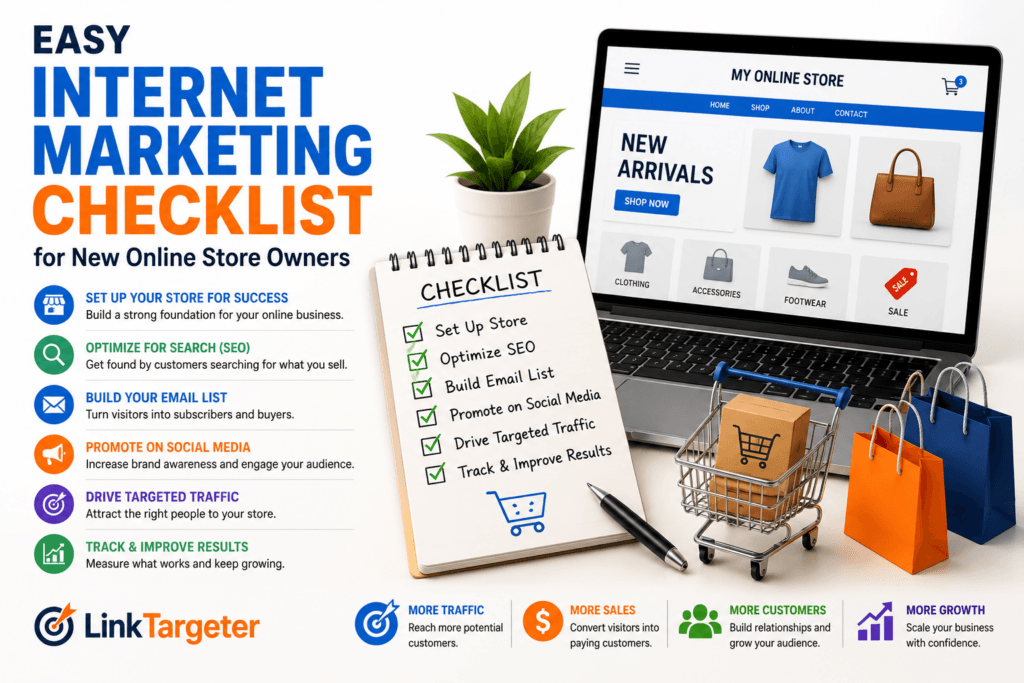
Launching a new e-commerce site is a major milestone. Your products are listed, your payment gateway is connected, and your checkout works seamlessly. Now comes the primary challenge every new e-commerce founder faces: how do you attract your first paying customers?
Many online store owners struggle not because their products are poor, but because target buyers simply don’t know the store exists. Sustained e-commerce growth requires a repeatable marketing strategy that consistently attracts qualified, high-intent traffic.
This internet marketing checklist outlines the essential steps to build store visibility, generate sales, and maximize your return on ad spend without blowing your launch budget.
Physical Promotion vs. Digital Channel Strategy
| Marketing Approach | Physical Promotion (Print/Flyers) | Targeted Digital Strategy |
| Audience Reach | Limited to local foot traffic | Scalable global or regional access |
| Buyer Intent | Low (unsolicited exposure) | High (actively searching for solutions) |
| Tracking & Analytics | Near-zero metric tracking | Real-time attribution and ROAS tracking |
| Cost Efficiency | High printing & distribution costs | Flexible, pay-for-performance budget control |
Why Physical Promotion Won’t Scale Your Online Store
Placing your new web domain on physical business cards, flyers, or local signs is a natural starting point, but physical media alone won’t scale an online business. Your potential online customer base is thousands of times larger than any offline audience you can reach locally.
To drive e-commerce sales, focus your time and capital where digital buyers spend their time. Just as you would look for high-foot-traffic locations offline, digital marketing requires placing your brand on the digital equivalents of high-traffic avenues: search engine results, niche content sites, industry newsletters, and social networks.
The Core Internet Marketing Checklist for E-Commerce
1. Build Your Long-Term Search Engine Presence (SEO)
Search engine optimization provides sustainable, high-intent traffic over time. Publish helpful content that addresses customer buying decisions, such as product comparisons, buying guides, and sizing or usage FAQs.
2. Capture and Nurture Email Subscribers
Email marketing remains one of the highest-ROI channels in e-commerce. Collect visitor email addresses upfront by offering launch discounts, free shipping codes, or downloadable guides. This gives you a direct line to re-engage prospective buyers without paying for repeated ad clicks.
3. Deploy Targeted Paid Advertising
While organic channels take time to mature, targeted paid campaigns deliver immediate visitor volume. Rather than competing in crowded, expensive bidding auctions right away, utilize cost-effective traffic solutions to establish baseline traffic.
For a complete breakdown on choosing the right ad platforms, read our guide on where to advertise your website online.
4. Build Strategic E-Commerce Partnerships
Collaborate with complementary brands, industry bloggers, and content creators. Joint promotions, guest posts, and affiliate partnerships allow you to tap into established audiences that already trust the referring source.
5. Diversify Beyond Single Ad Networks
Relying entirely on a single auction platform like Google Ads can quickly inflate acquisition costs. Combining search ads with contextual placements, fixed-rate promotions, and organic channels lowers overall acquisition risk. See how different promotion models compare in our breakdown of LinkTargeter vs Google Ads.
Pre-Launch Optimization Checklist for Online Stores
Sending paid visitors to an unoptimized website wastes ad spend. Ensure your store meets these baseline standards before spending money on promotion:
Store Readiness Checklist:
Mobile-Responsive Design: Verify that checkout forms and product galleries work effortlessly on mobile devices.
Rapid Page Load Speed: Ensure store pages load in under 3 seconds to reduce bounce rates.
Clear Call-to-Action (CTA): Keep “Add to Cart” and “Buy Now” buttons prominent above the fold.
Trust Badges & Security Seals: Display SSL certificates, accepted payment icons, and clear return policies.
Verified Conversion Tracking: Confirm that purchase tracking tags fire correctly in Google Analytics.
Geographic Campaign Alignment: Ensure ad campaigns target your primary shipping regions, such as USA targeted website traffic.
Learn more about pairing landing page readiness with low-cost campaigns in our guide on cheap advertising that drives website sales.
Measuring E-Commerce Metrics That Drive Profitability
Successful online store owners evaluate campaign performance using revenue-driven metrics rather than vanity metrics like page views. Focus your analysis on:
Conversion Rate: The percentage of store visitors who complete a purchase.
Average Order Value (AOV): The average dollar amount spent per customer order.
Customer Acquisition Cost (CAC): The total marketing spend required to acquire one new customer.
Return on Ad Spend (ROAS): The revenue generated for every dollar invested in advertising.
To understand why tracking conversion events matters more than measuring raw visitor volume, read our detailed analysis on why conversions matter more than clicks.
How LinkTargeter Helps New Online Stores Grow
LinkTargeter simplifies store promotion by offering fixed-quantity traffic packages designed to deliver steady, targeted visitors without unpredictable auction price surges.
Core LinkTargeter Benefits:
Fixed, Upfront Pricing: Test store conversion rates without variable click costs.
Audience Category Targeting: Direct visitors from channels closely aligned with your product line.
Natural Delivery Pacing: Distribute traffic evenly across your promotion window.
No Complex Setup: Launch campaigns quickly without needing an external advertising agency.
Explore budget-friendly promotional options in our guide to affordable advertising for small businesses or review available visitor packages on the targeted website traffic campaign page.
Frequently Asked Questions
What is the fastest way to get sales for a new online store?
Combining conversion-optimized landing pages with targeted paid advertising provides immediate site visibility and quick feedback on your offer.
Should I start advertising immediately after launching my store?
Only after verifying that your checkout flow works seamlessly, pages load quickly on mobile devices, and conversion analytics are fully active.
How do I keep customer acquisition costs low when launching?
Focus on precise audience targeting, build an email list to capture re-engagement opportunities, and combine search ads with fixed-rate promotion channels to manage overall spend.
Build a Scalable E-Commerce Growth Engine Today
Growing a profitable online store isn’t about running ad campaigns everywhere—it’s about reaching qualified buyers efficiently and converting them into repeat customers. By checking off these core internet marketing steps and measuring conversion performance continuously, you can build a predictable, scalable e-commerce business.
Ready to bring targeted buyers to your online store? Start Your Targeted Traffic Campaign Today.